Villa Paolina Bonaparte
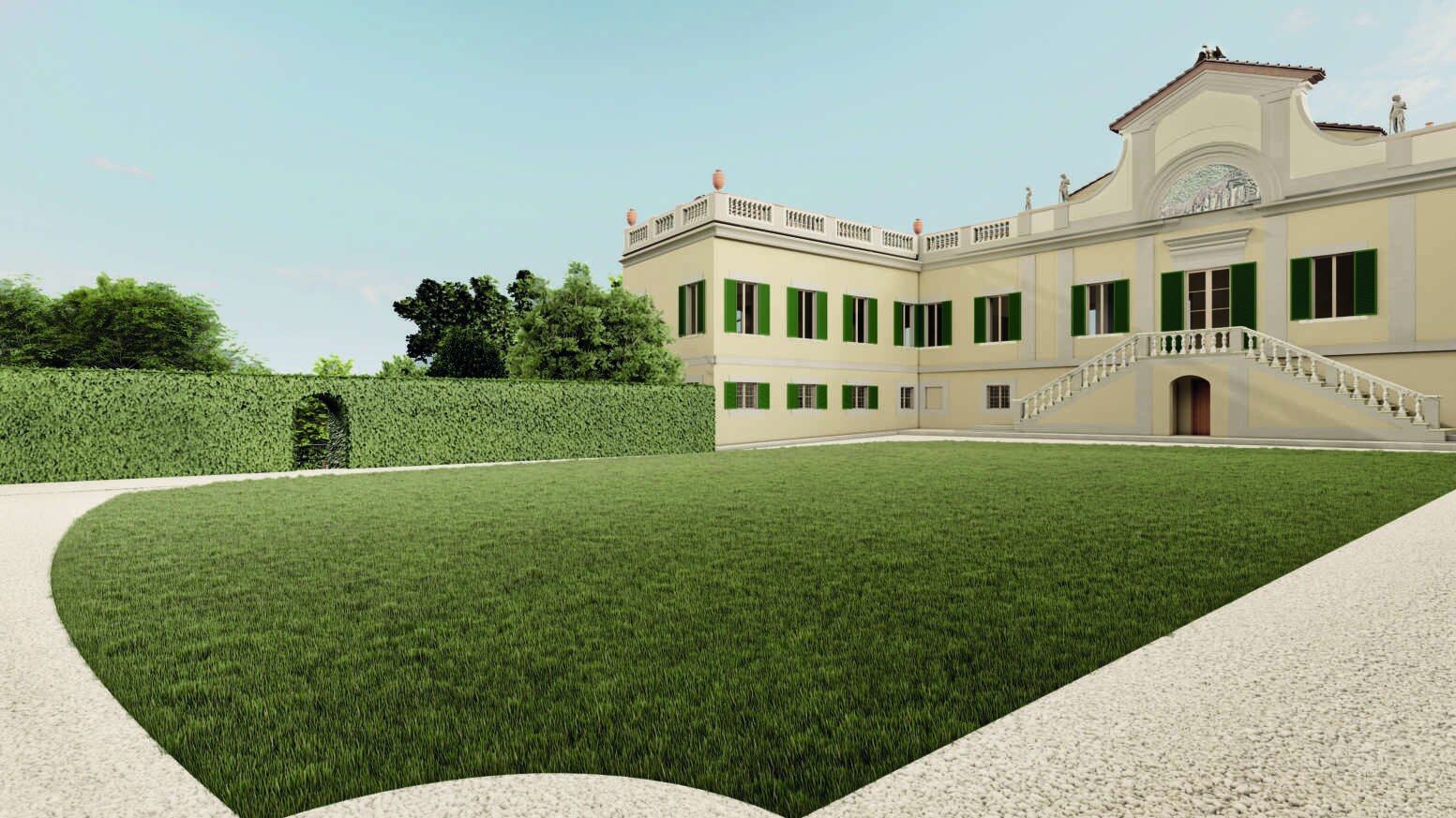
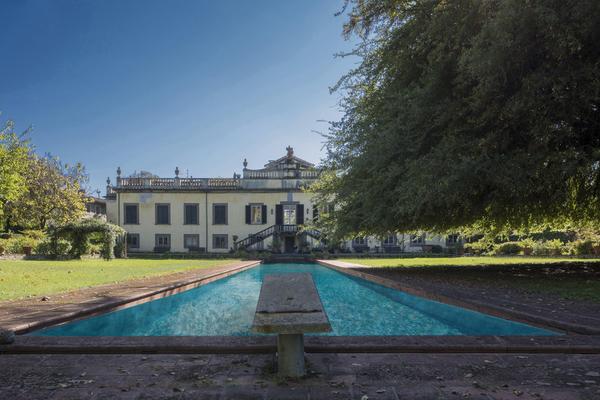
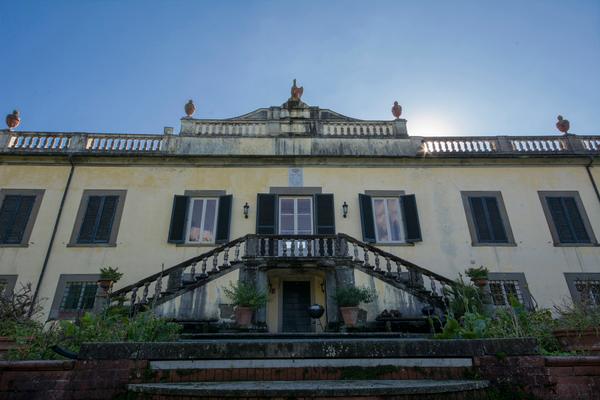
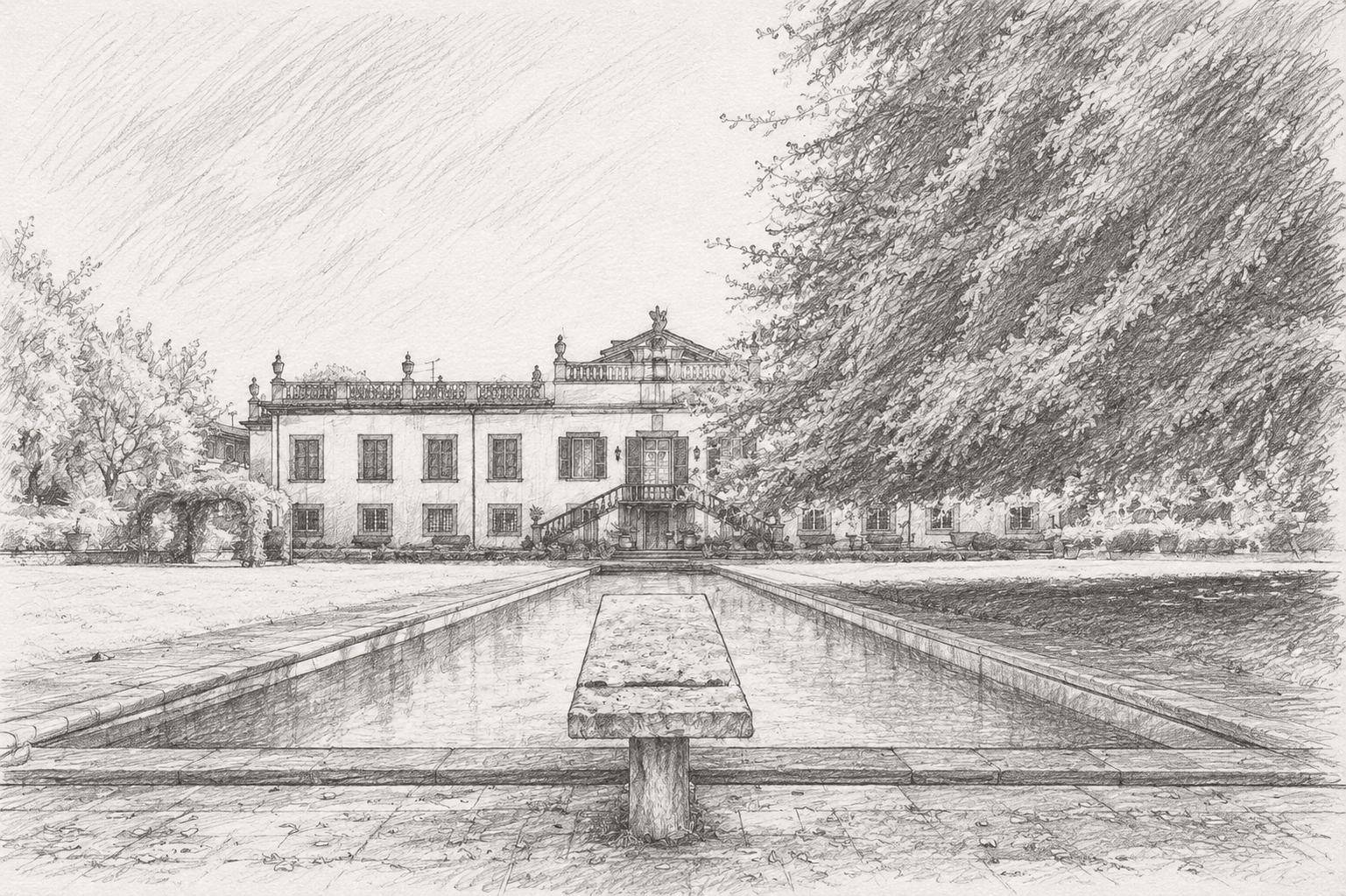
A graphite pencil drawing of Villa Paolina Bonaparte's south façade: a horseshoe-plan villa crowned by a tympanum and imperial eagle, a balustrade of urns along the roofline, a double staircase rising to the central door, and a long reflecting pool with a stone bench in the foreground, framed by a great tree.
Monte San Quirico · Lucca · Tuscany

Villa Paolina Bonaparte

A house kept by careful hands across the centuries, and the stories held within its walls.

scroll to wander
i · a house through time

The Story

Four centuries of custodianship, held in trust

The villa has been in our family's care for one chapter of a far longer life. The story we keep begins on a hillside above Lucca in the last decades of the seventeenth century, and has been handed down with quiet devotion ever since. We think of ourselves not as owners but as custodians, and of these pages as the house's own memory.

Late 1600s

The Buonvisi of Lucca

Documented from the second half of the seventeenth century, the estate was first held by the Buonvisi family, whose comet emblem still marks the access gate.

1670

The Ottolini-Balbani

The villa passed to the Ottolini-Balbani, among the patrician houses of the Lucchese republic.

1822 – 1825

Paolina Bonaparte

Napoleon's favourite sister made the villa her home and gave it the character it still wears. Her chapter follows below.

1836 onward

Boccella · Ruggero · Tealdi · Pardini

The house passed to the Boccella family, then the Ruggero, later to Count Aubrey William Tealdi, and in time to the Pardini, each leaving the place a little of themselves.

Today

In our family's care

The estate is held now in the care of our family, its newest custodians. We keep it as a living home in our effort to maintain the continuity of care.
ii · the villa's namesake

Paolina Bonaparte

1822 until her death in 1825, and forever after

The south façade, rendered in soft graphite-sepia
The south façadepl. i
la bella paolina

She gave the house its face

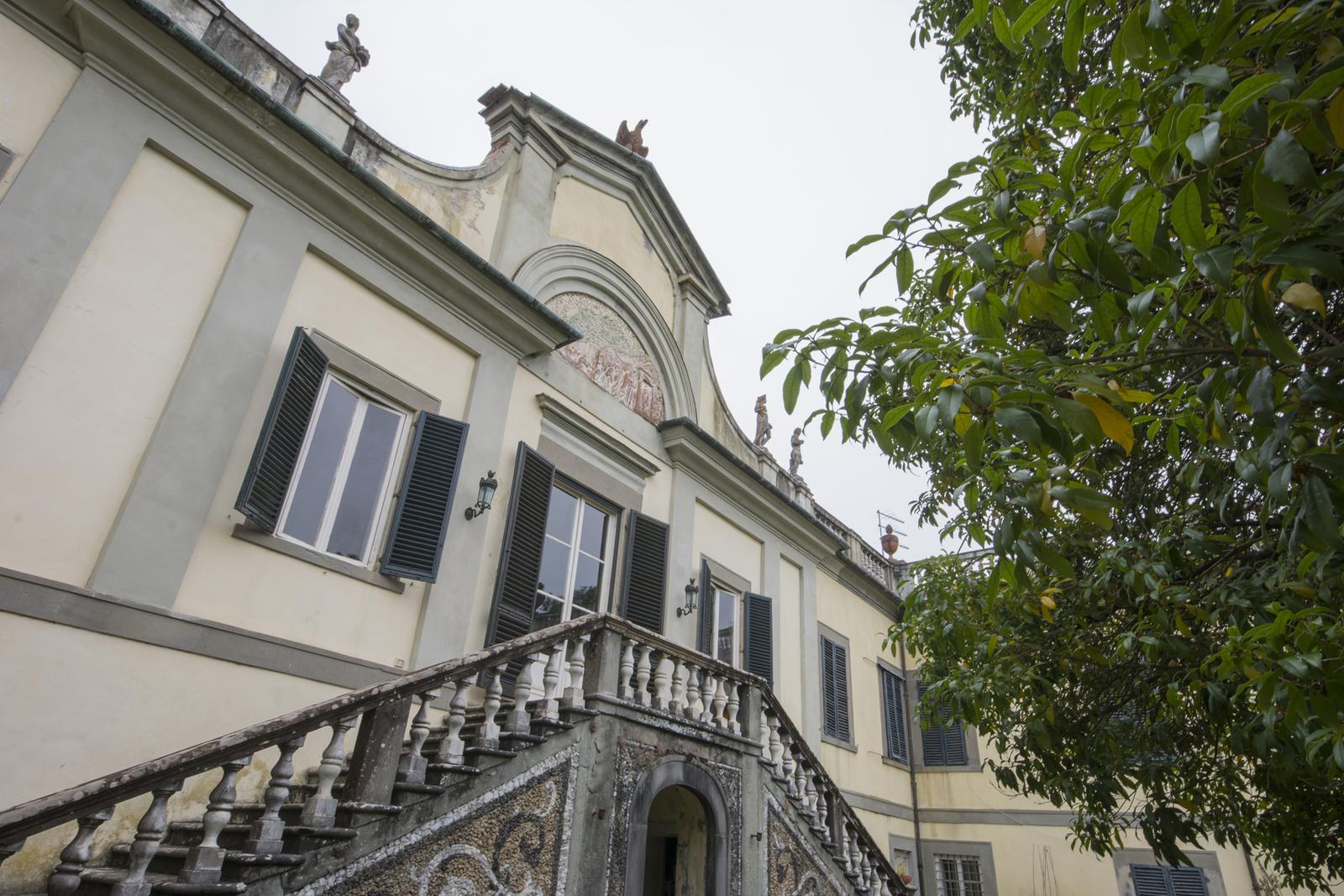
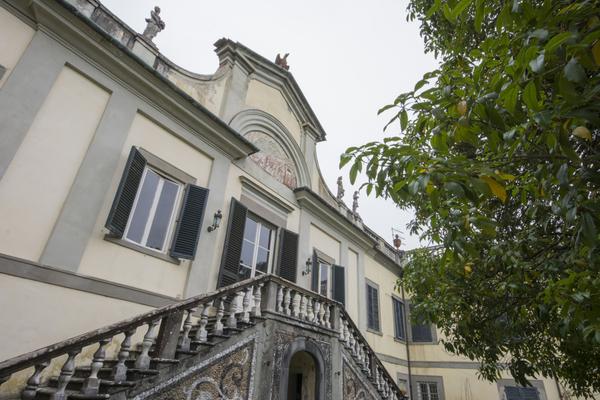
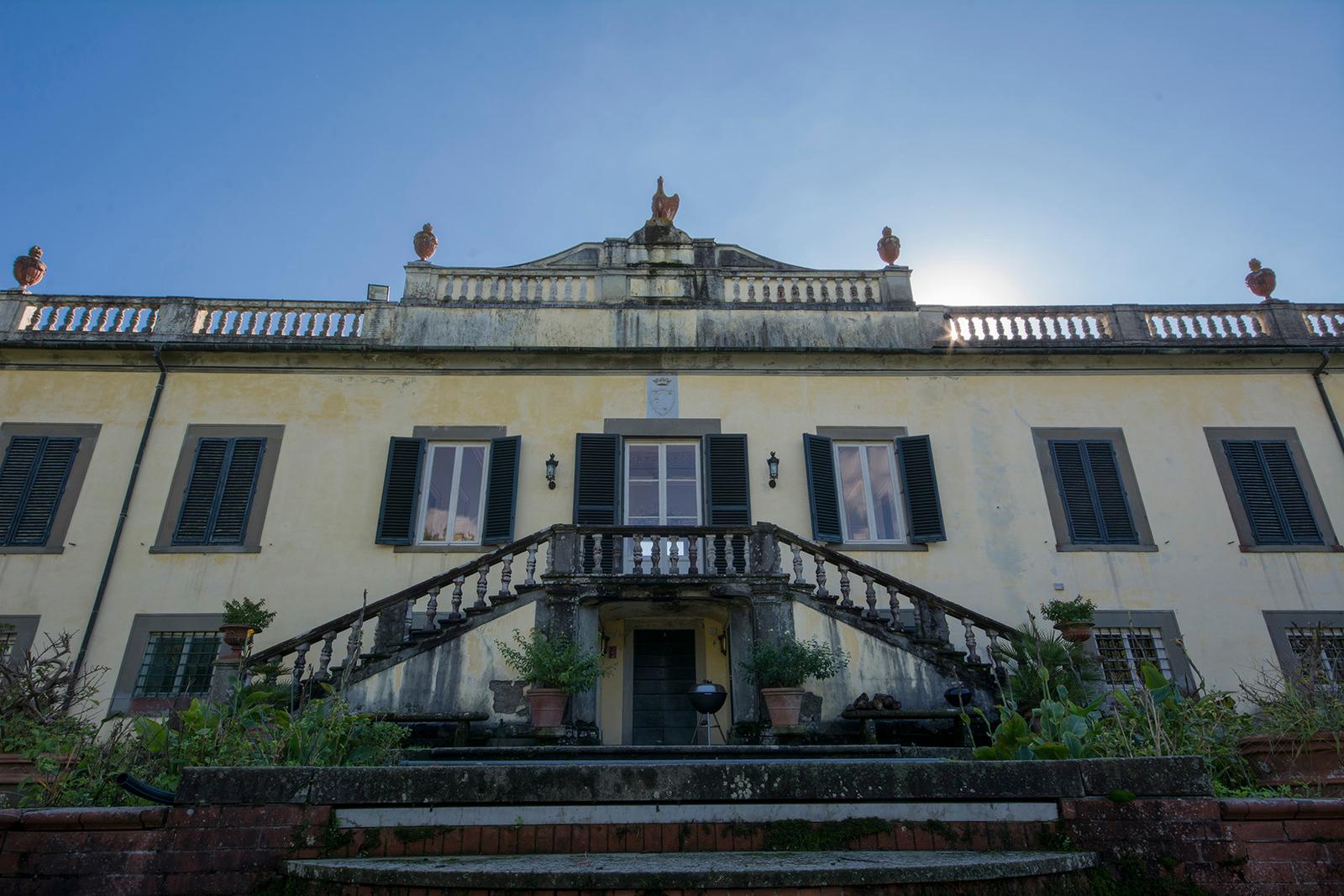
Paolina lived here from 1822 until her death in 1825 and, in that time, reshaped the villa entirely. She reworked the main eastern body and set above the door a bas-relief lunette of a procession bearing offerings to a goddess. She laid the mosaic along the staircase and crowned the front with the tympanum that gives the house its present face.

The great gateposts are inscribed with her name. And she endures beyond these walls in Antonio Canova's life-size Venus Victrix, reclining, serene, now held in the Galleria Borghese in Rome.

iii · the building

The Architecture

An appreciation of line, light, and stone

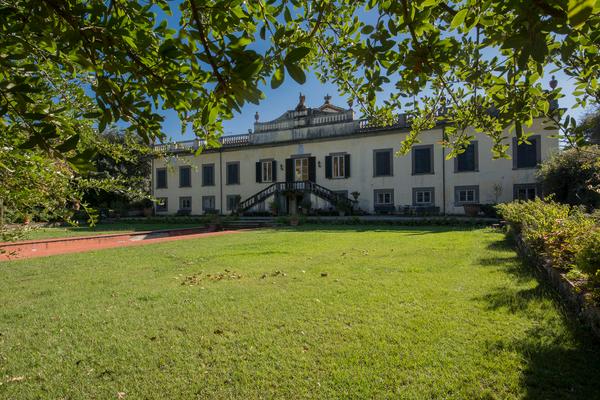
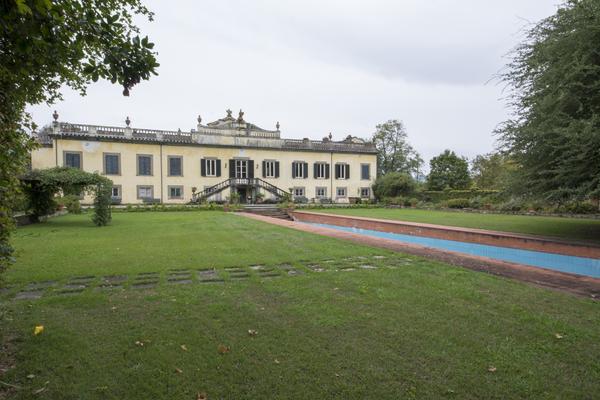
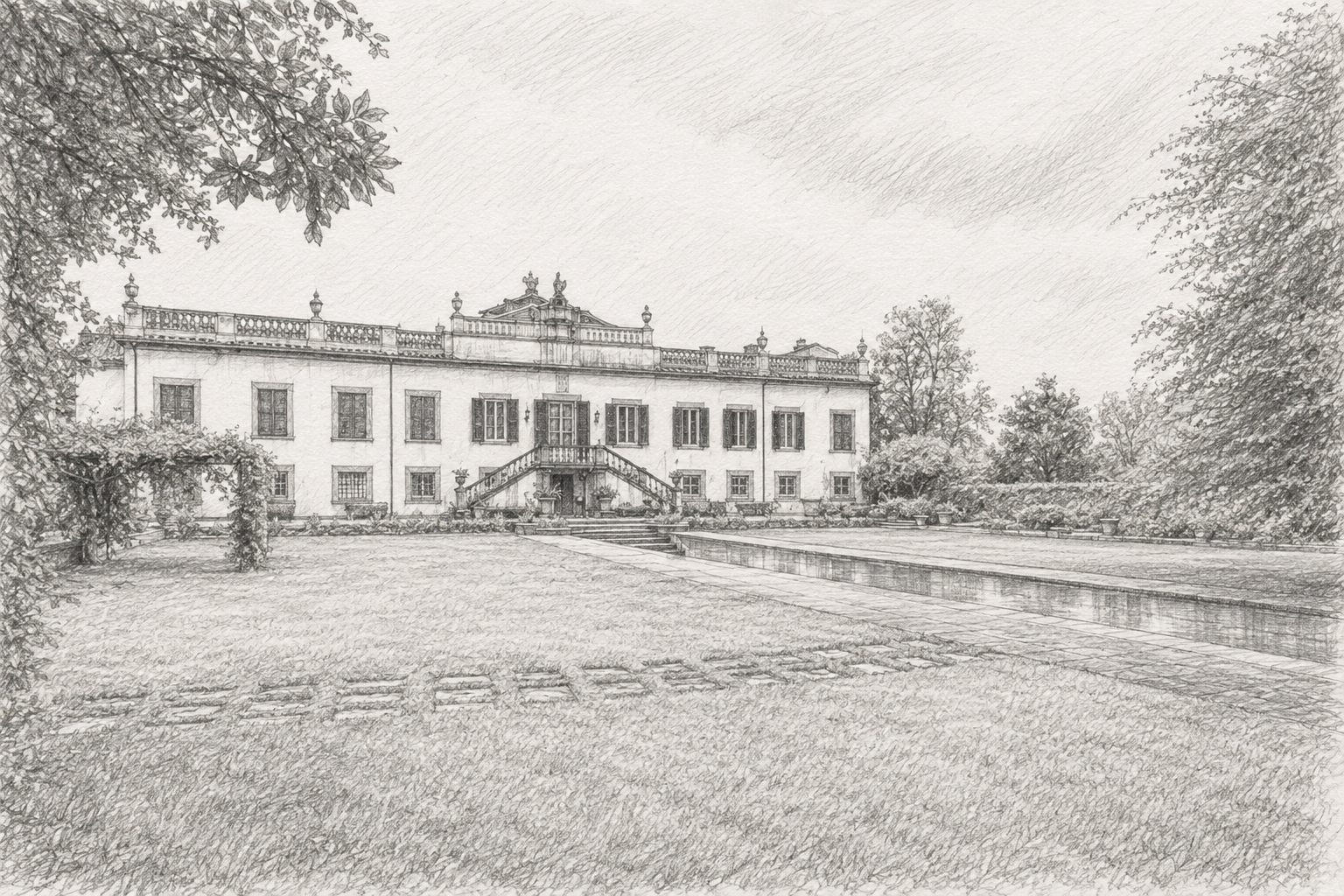
A graphite pencil drawing of Villa Paolina Bonaparte seen across the garden: the long two-storey façade with its balustrade and central tympanum, the double staircase climbing to the door, a vine-covered pergola at the left, and the reflecting pool stretching away to the right across a wide lawn.
The south front, drawn from the gardena study
The villa's carved tympanum above its double staircase, in soft sepia-graphite tone
The carved tympanumpl. ii
a horseshoe crowned by an eagle

A façade composed like a frontispiece

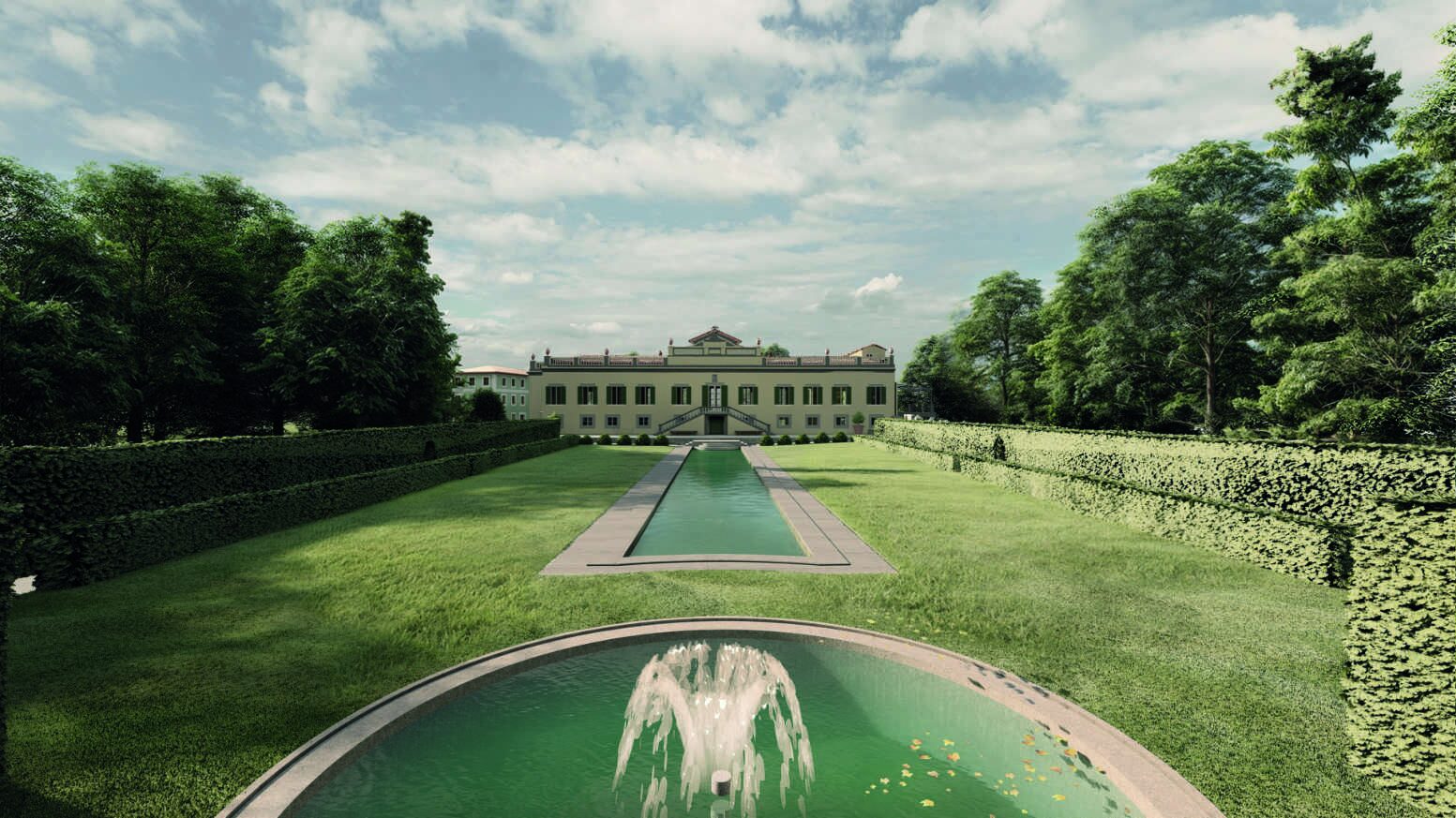
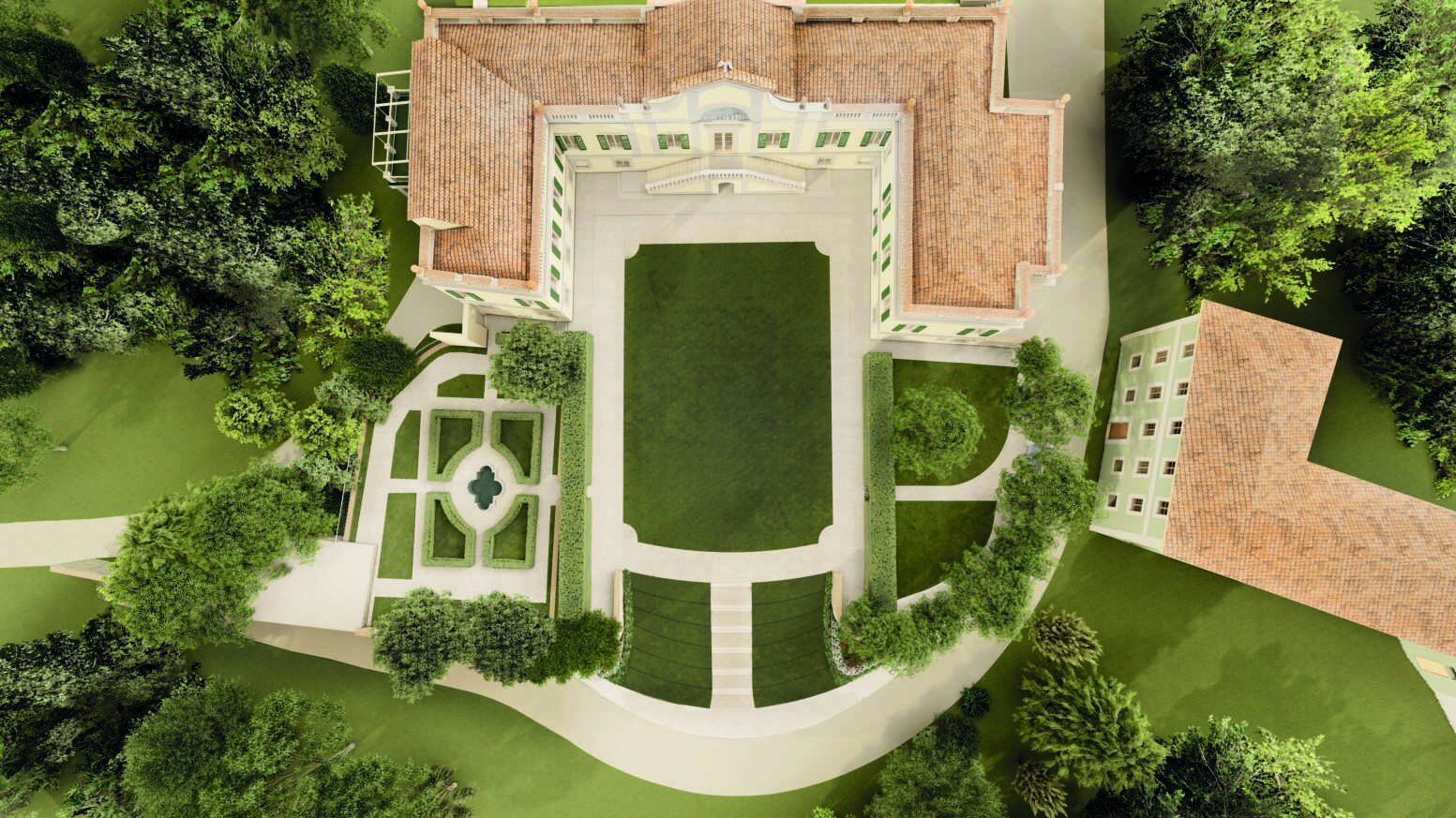
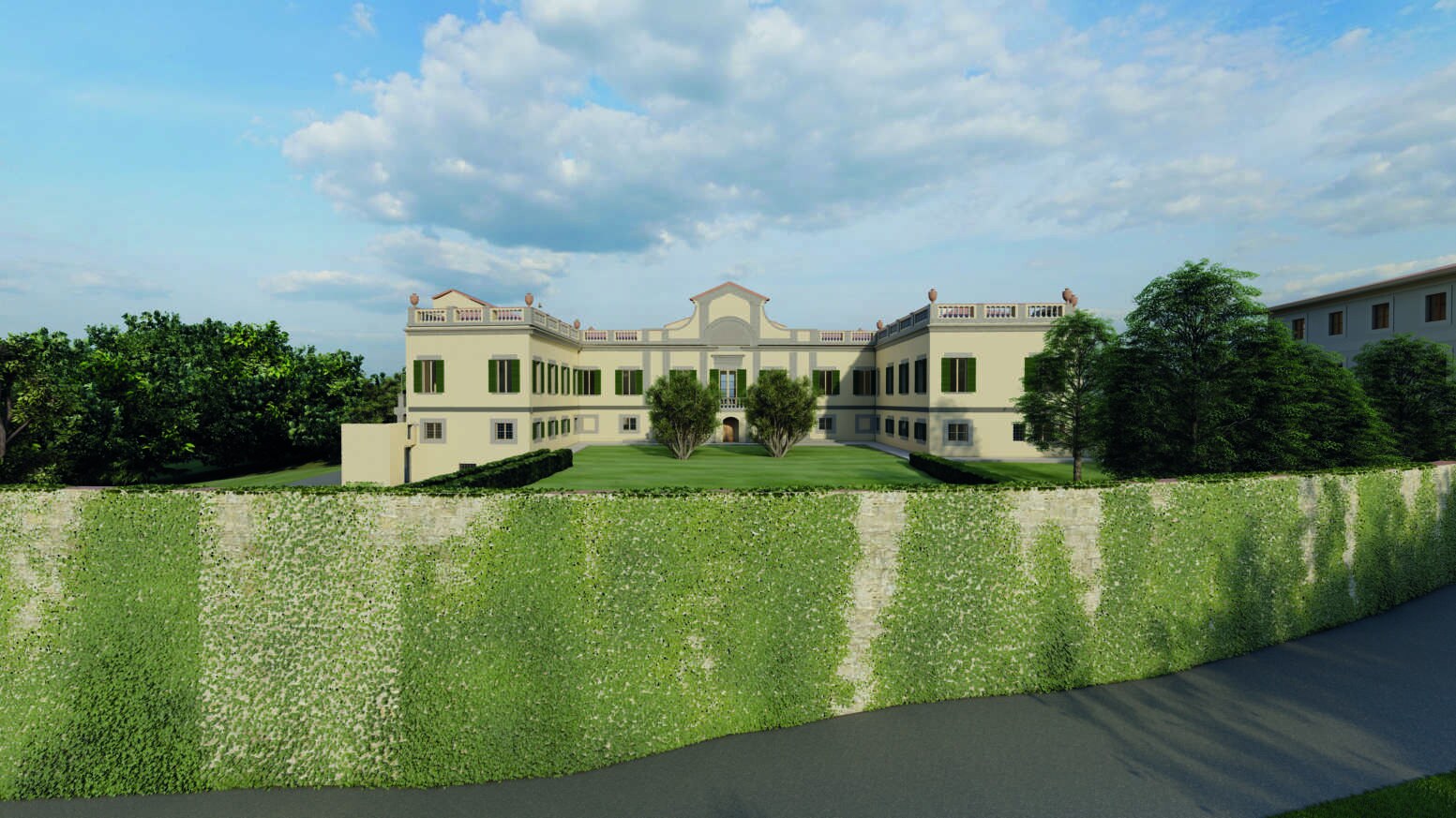
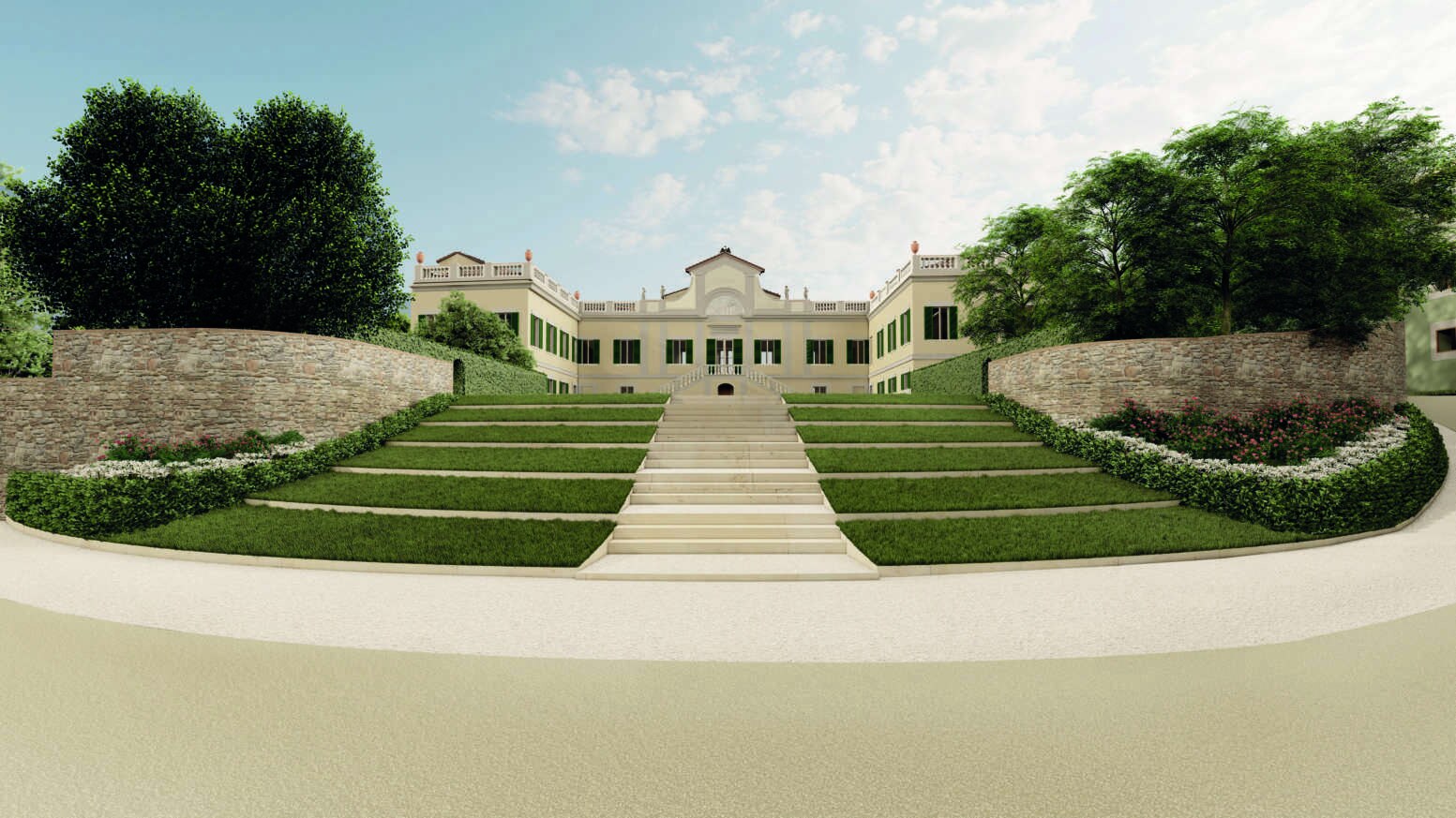
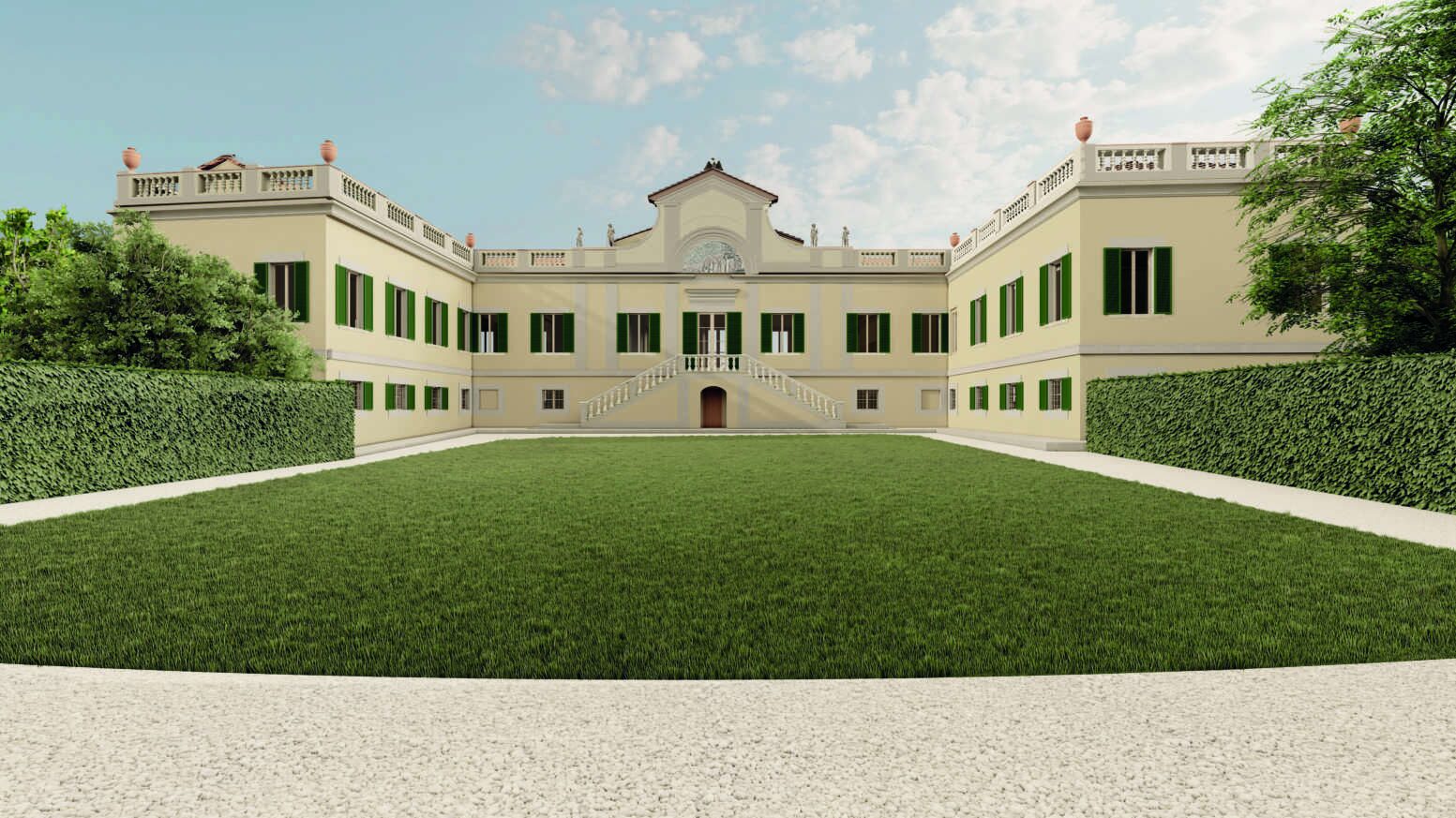
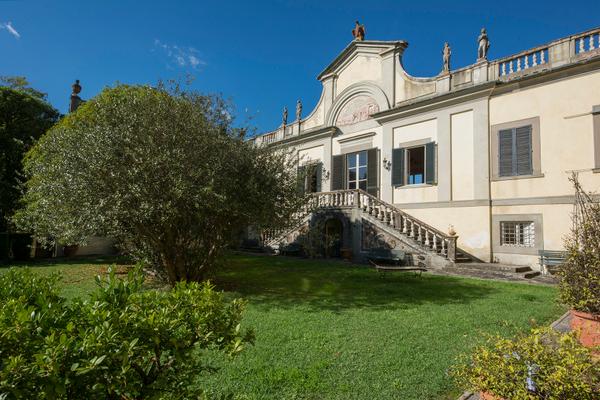
The villa is laid out on a horseshoe plan, crowned at its centre by an imperial eagle, a motif repeated on each of the great gateposts. Along the roofline stand eight marble statues of deities above a balustrade of marble and terracotta urns, while quartz and lava mosaics dress the staircase. Double staircases rise on both the north and south fronts.

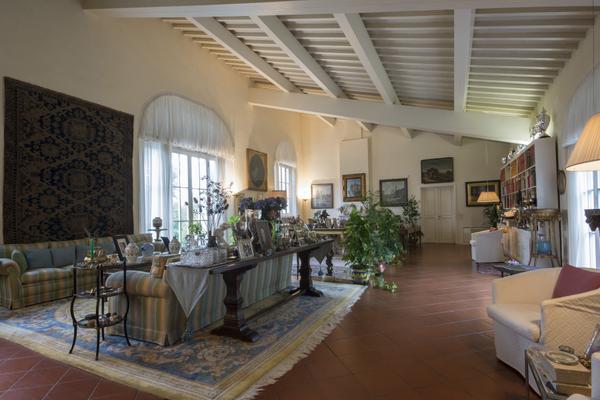
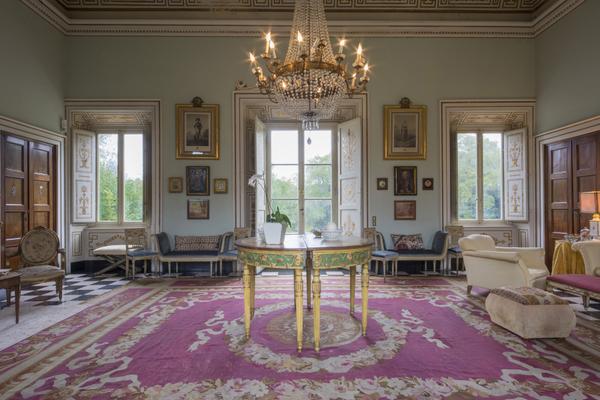
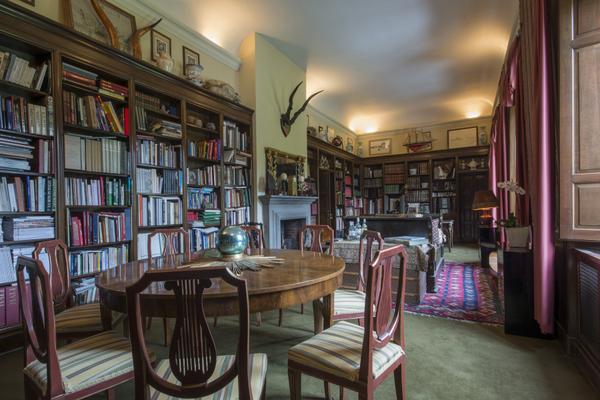
Within, the main salon glows with gilded frescoes in the Empire taste, beside a second salon and a dining room; the library was once Paolina's own bedroom. Much of the character we read today is also the work of careful nineteenth-century hands.

The Imperial Eagle

Crowns the central tympanum of the façade, and is repeated on each of the gateposts below.

Eight Deities

Marble statues of the gods, set above a balustrade of marble and terracotta urns along the roofline.

Quartz & Lava Mosaics

Laid into the staircase during Paolina's reworking of the eastern body.

The Library

A large room of books that was once Paolina's own bedroom, beside the gilded Empire salon.

iv · the grounds

The Gardens & Park

Nine hectares of ancient wood, camellia, and open sky

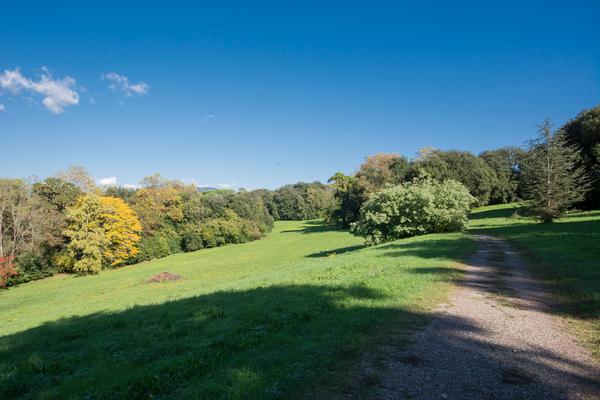
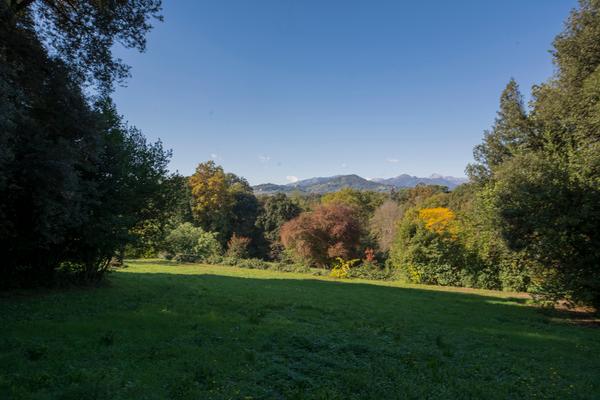
A wide view across the Romantic park toward distant hills, rendered in soft graphite-sepia
The Romantic parkpl. iii

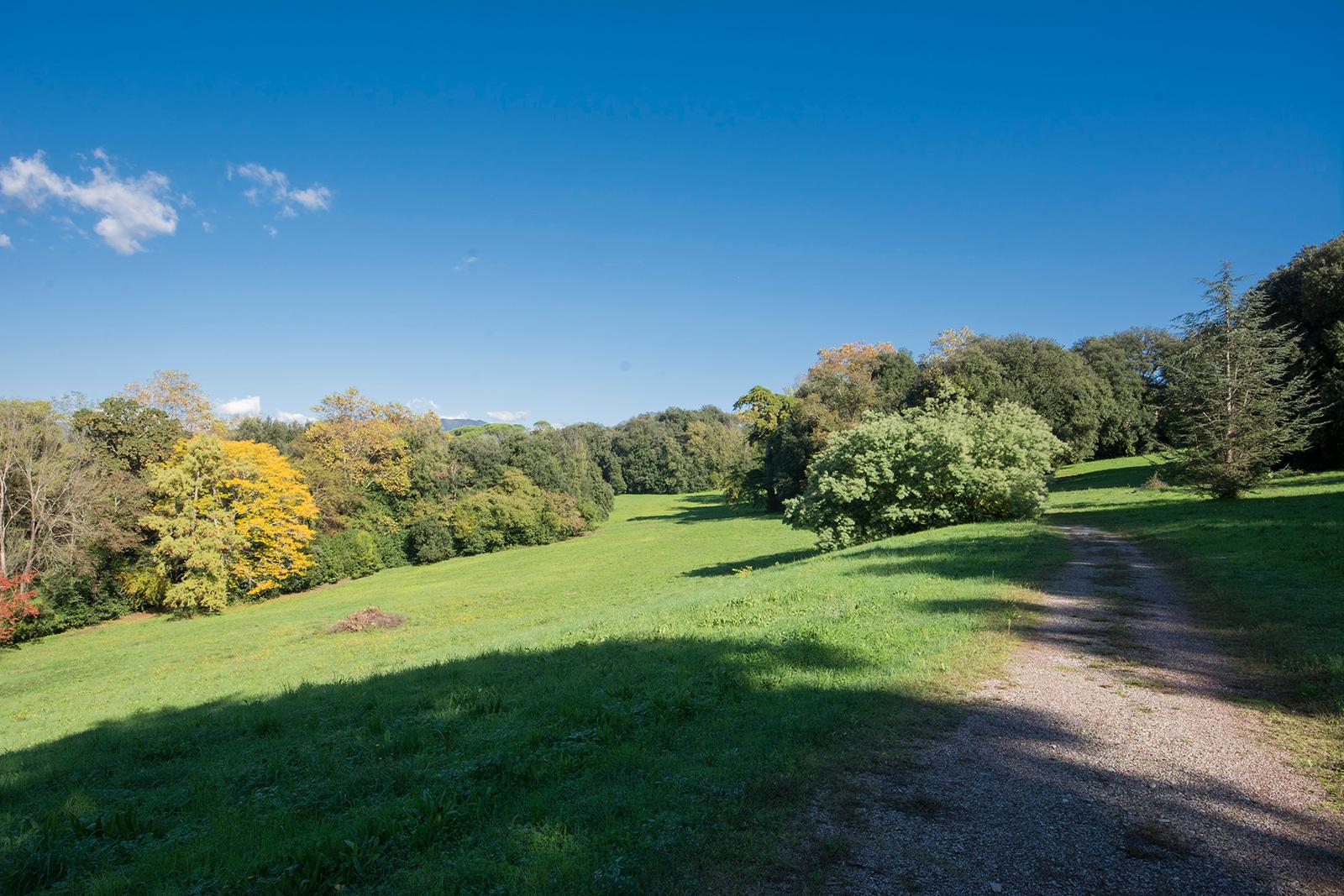
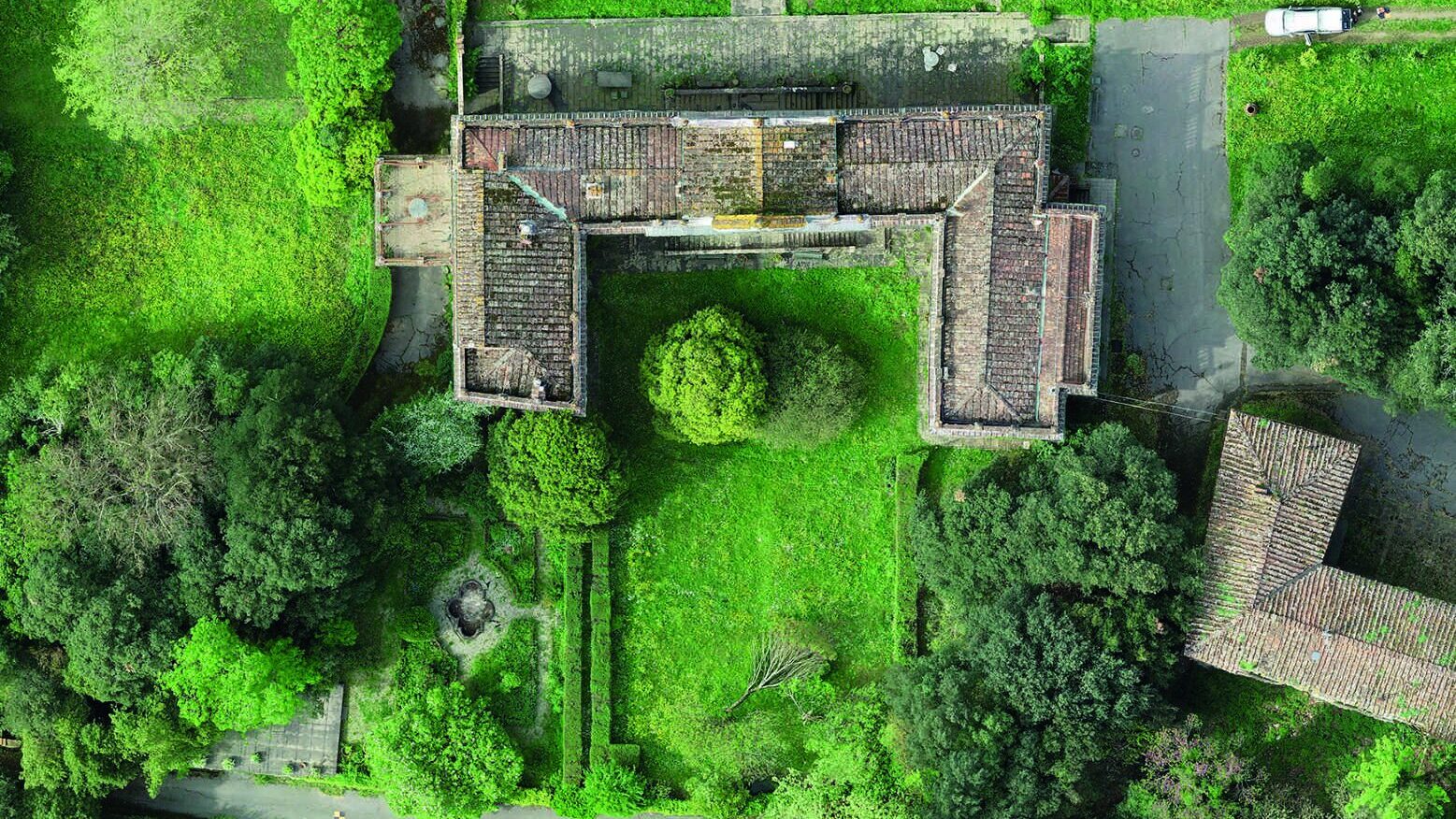
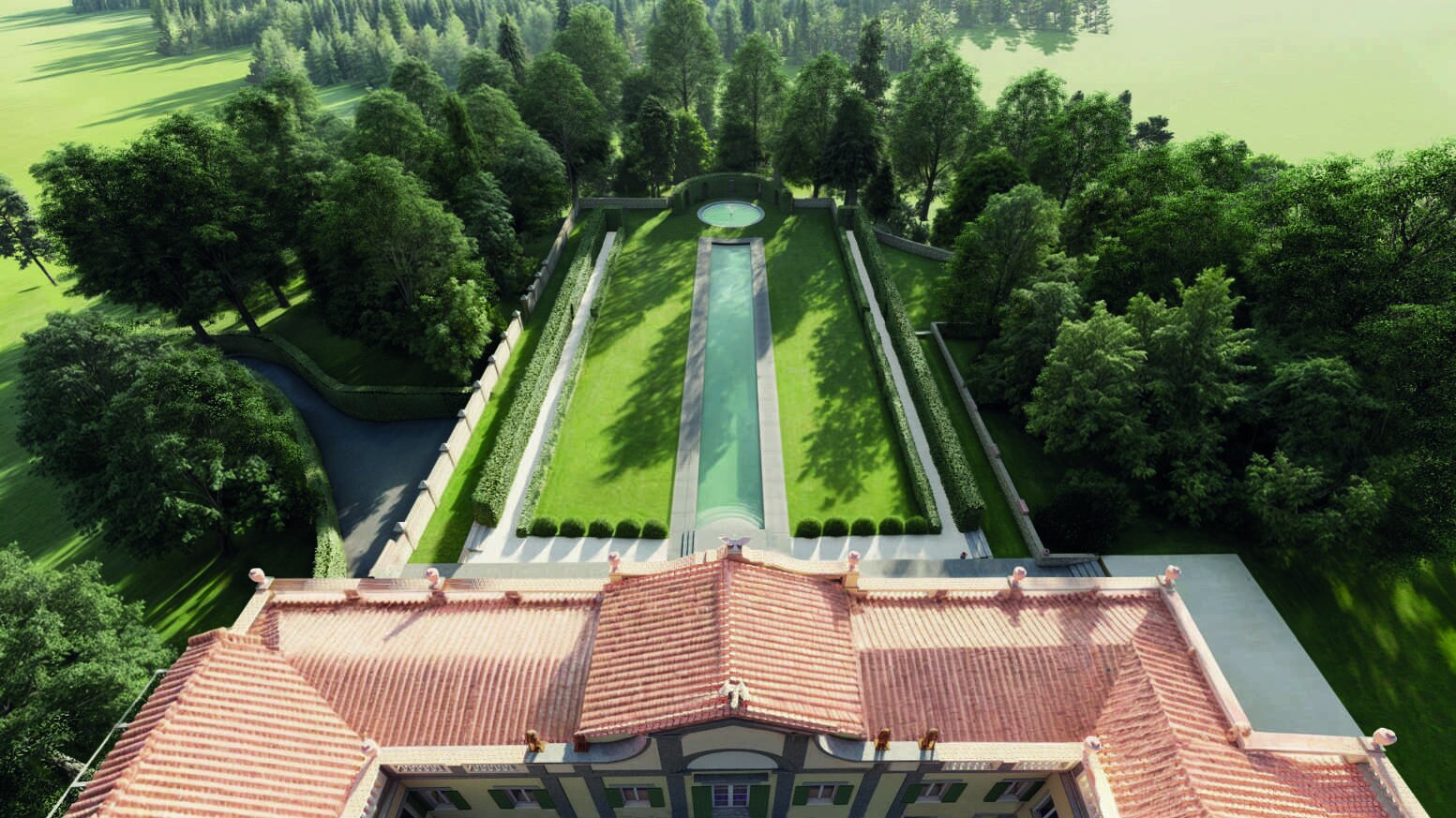
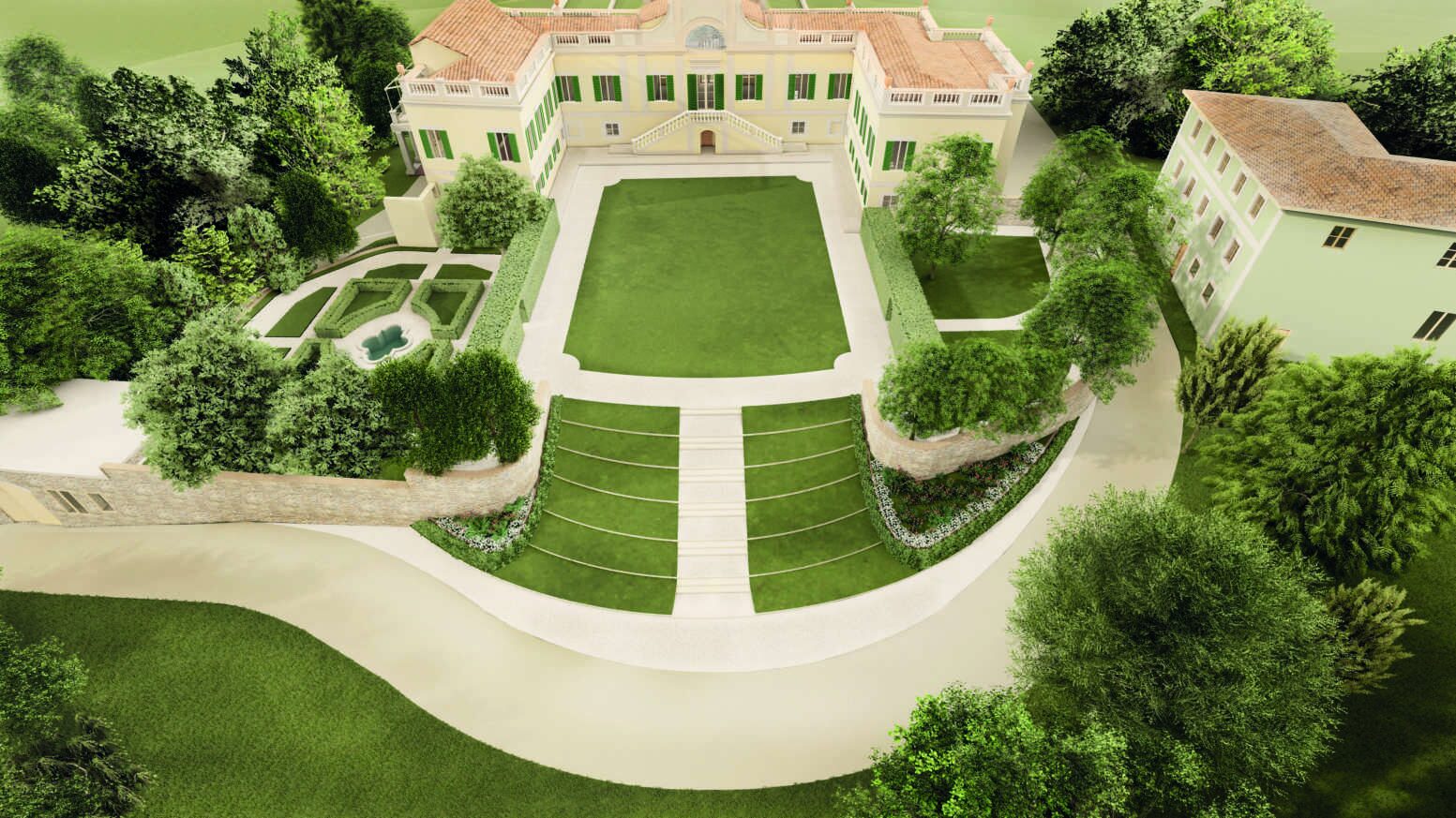
The park of some nine hectares was first laid out in Paolina's day with an English landscape architect, then landscaped again in the mid-1800s in the Romantic taste, with curving paths and clearings cut through the wood. Without warning they open to the Apuan Alps and the walled city of Lucca below, so the grounds feel larger than they are.

The Camellia Grove

One of the oldest in Lucca, its blooms reaching up to twelve metres tall.

Ginkgo & Sequoias

A single great ginkgo biloba and two evergreen sequoias, among ancient oaks, lindens and cedars.

The Italian Gardens

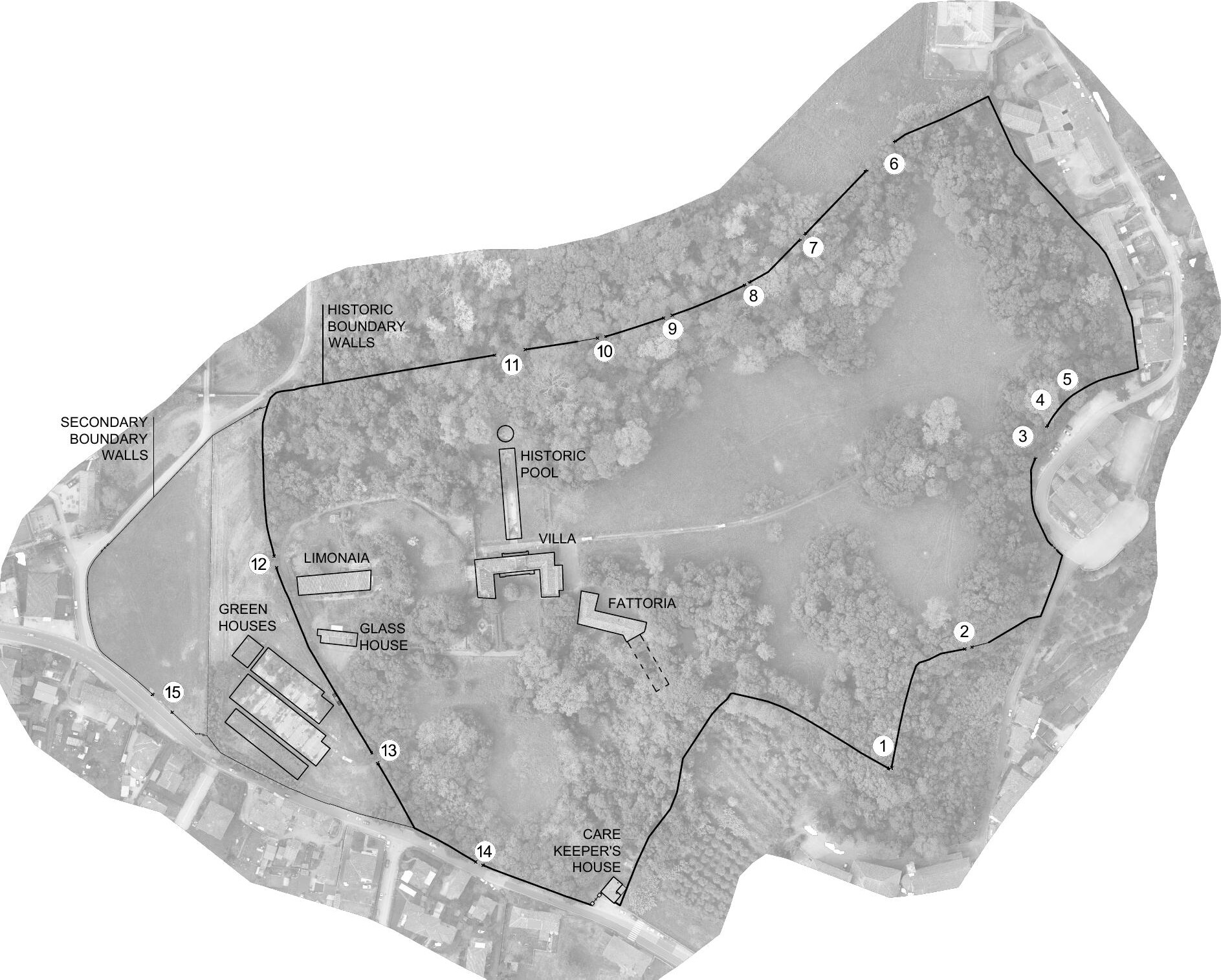
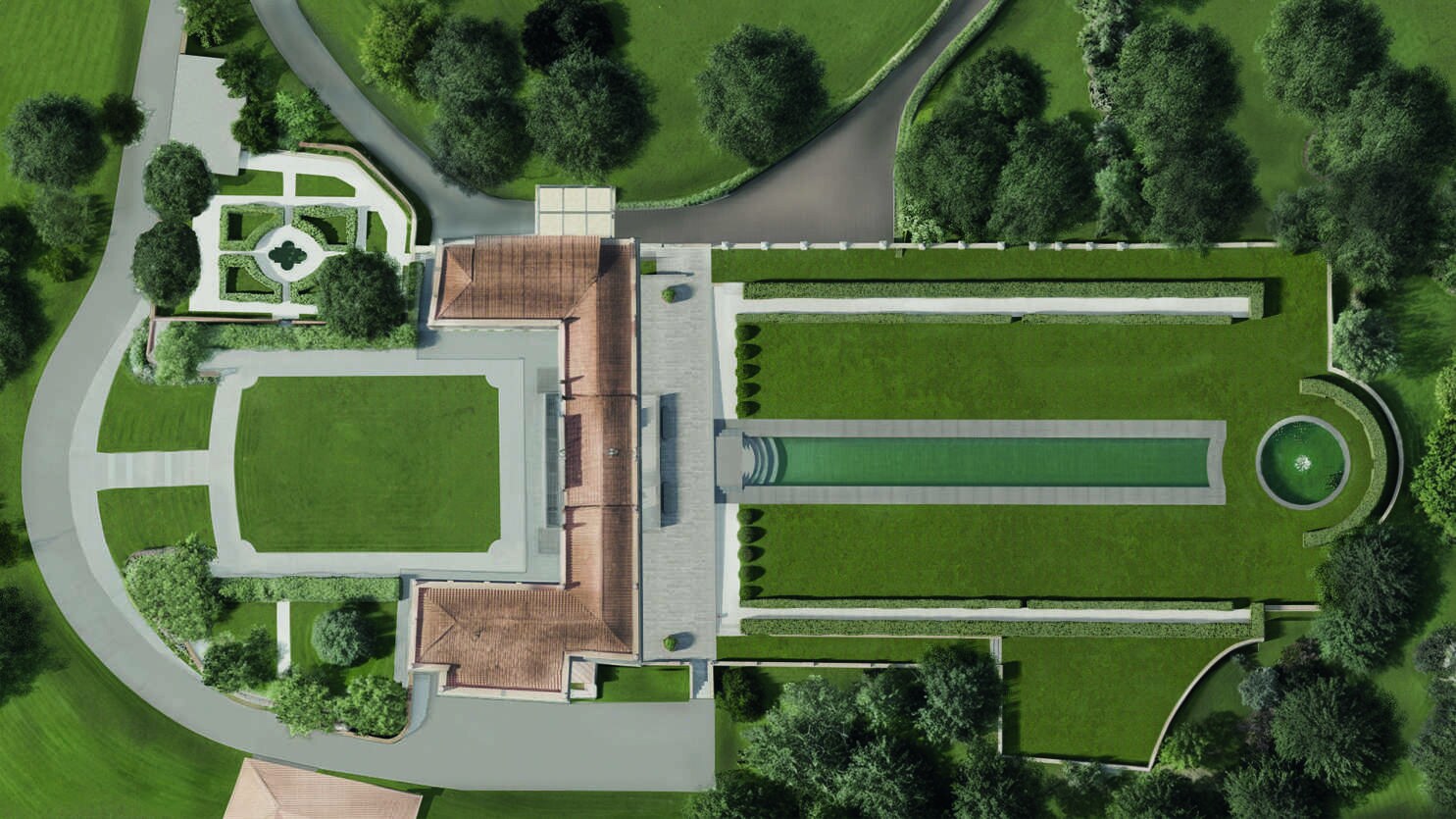
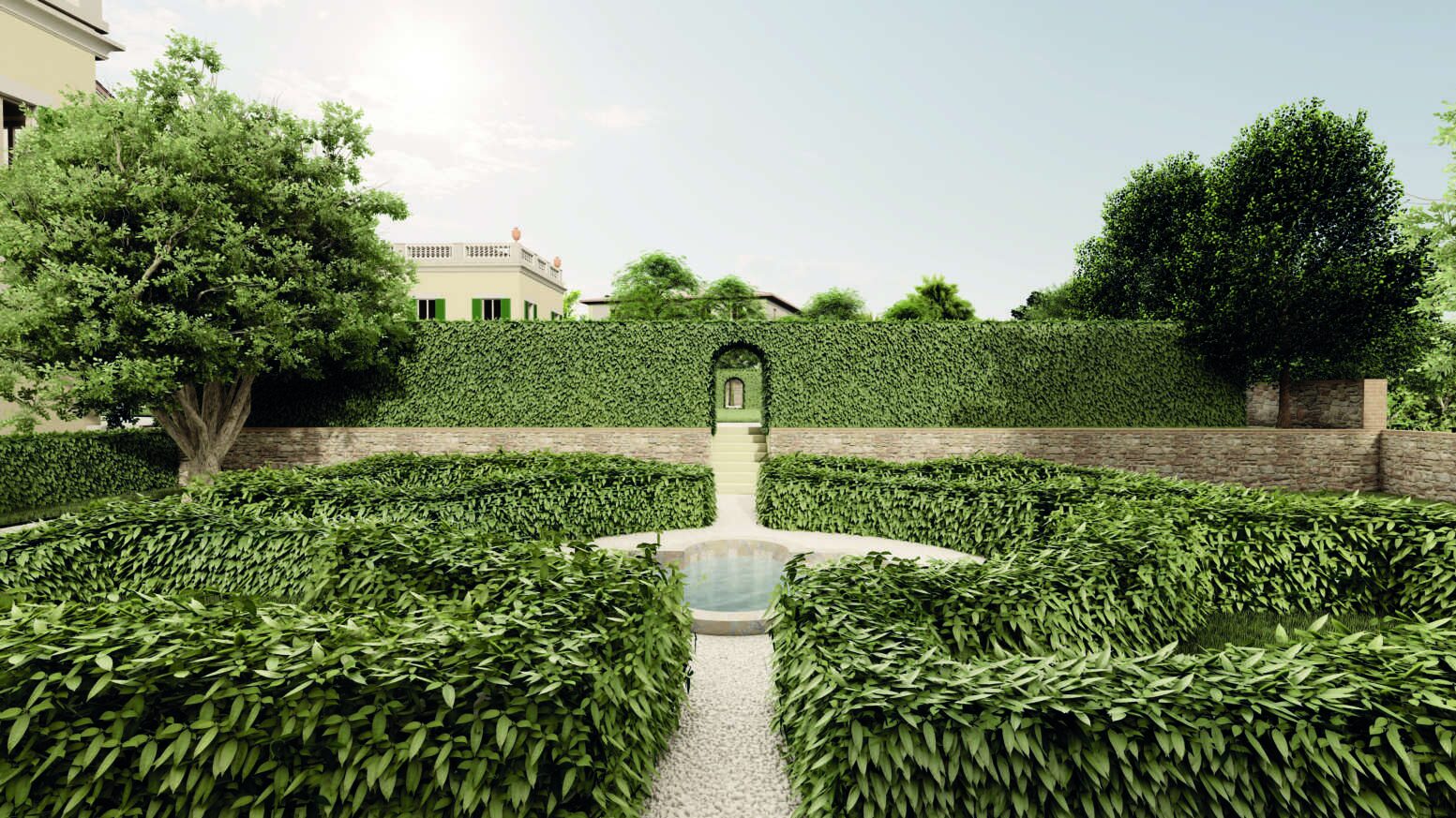
Two small formal gardens added after Paolina's day, one beside the villa, one by the limonaia.

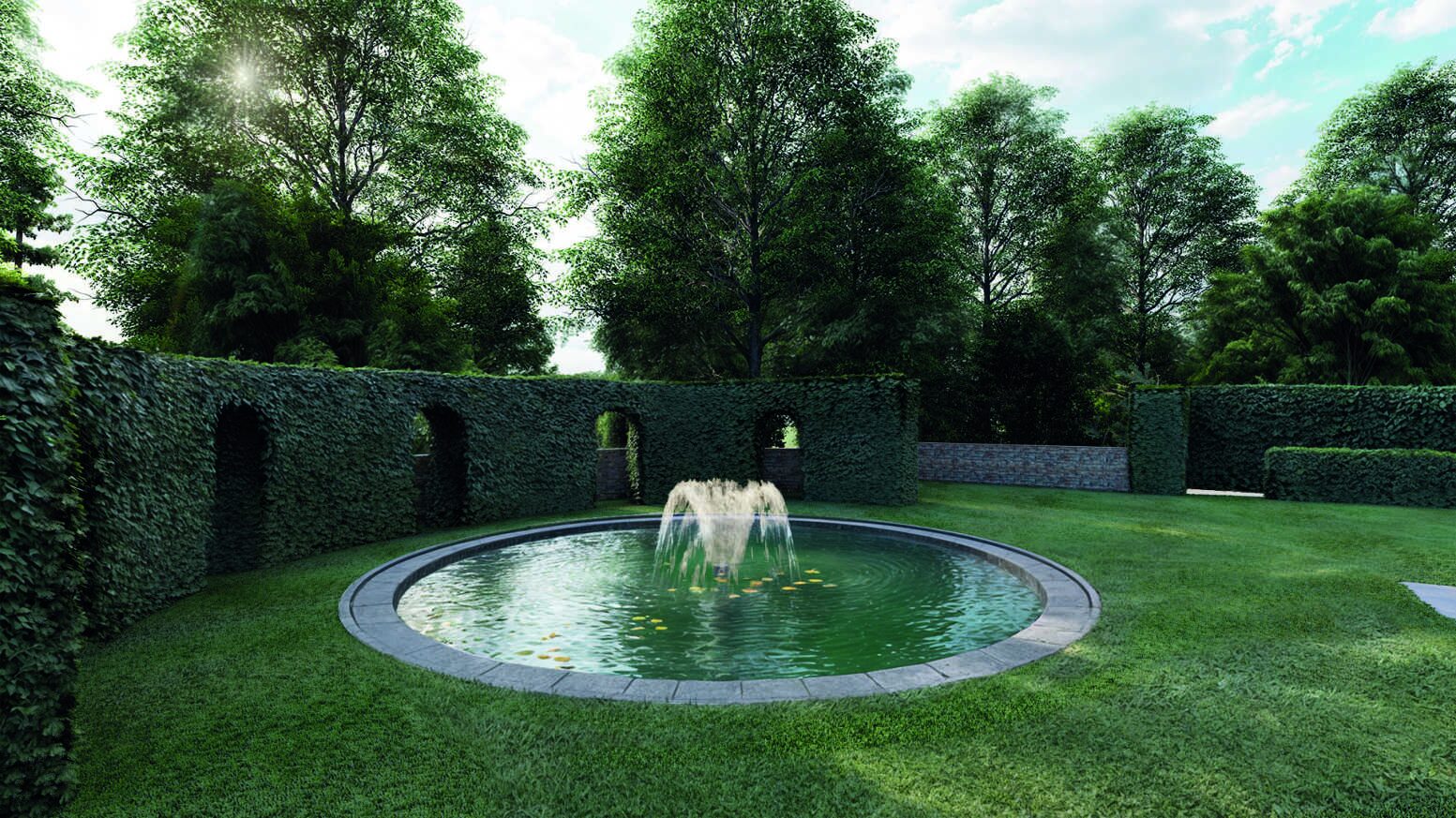
The Heart-Shaped Basin

Built for Paolina, among several fountains and an ice house hidden behind the camellias.

The Belvedere

A wrought-iron gazebo paved with mosaic, set on the highest point of the park.

The Waters

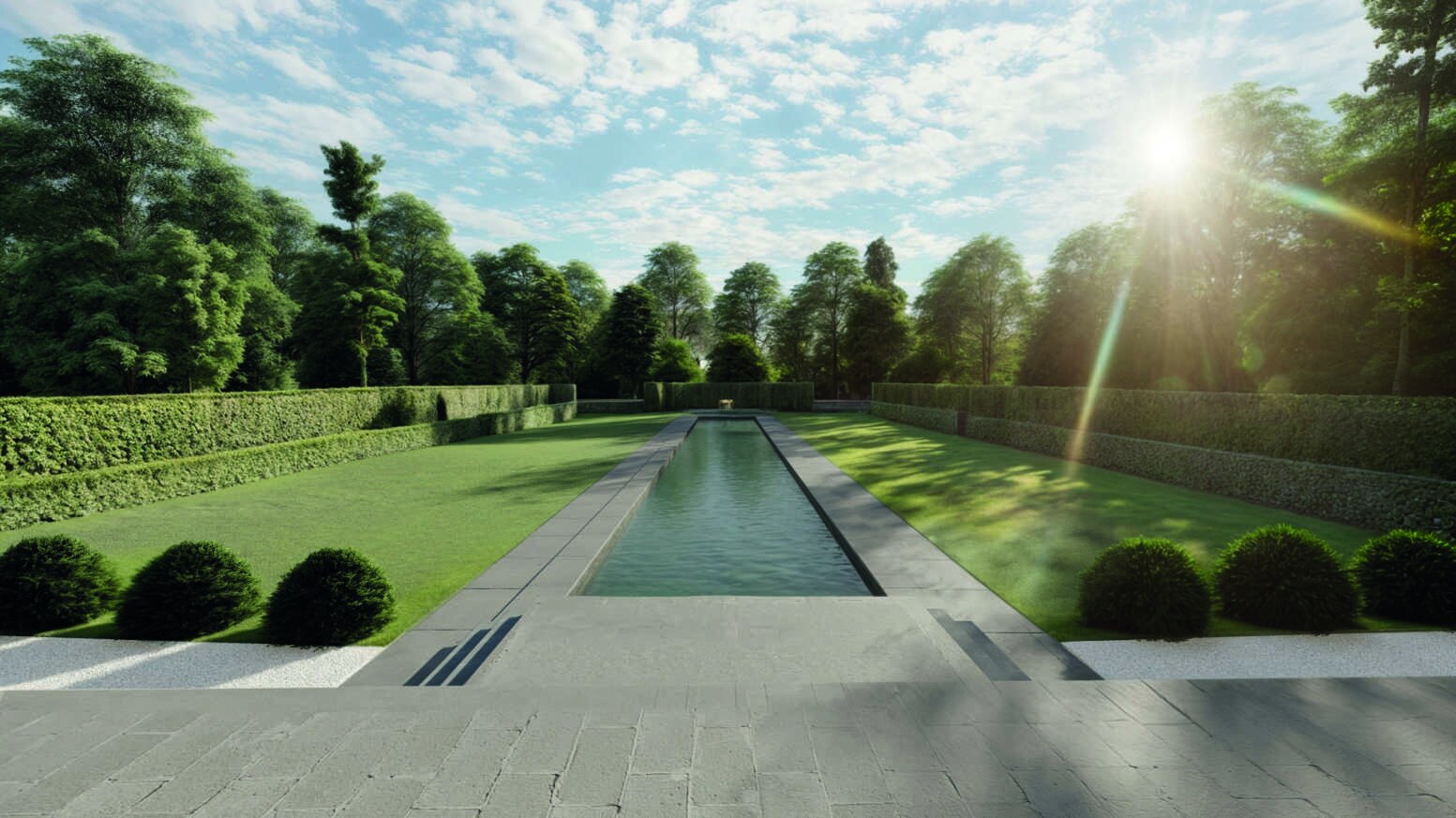
A great rainwater cistern still supplies the grounds; a rear basin now serves as a 43-by-4-metre pool.

v · stewardship

In Our Care

A living legacy, gently kept

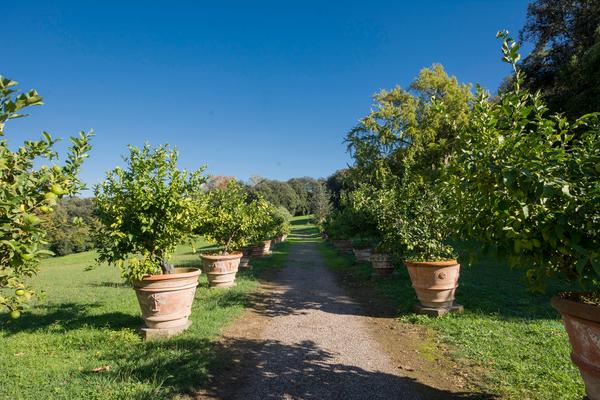
Potted lemon trees of the limonaia along a garden path, in soft sepia-graphite tone
The limonaiapl. iv
to keep, not to freeze

A home, still lived in

To keep a house like this is to make a thousand quiet decisions: what to mend, what to leave, and what to let the years gently soften. We have tried always to hold the villa as it wishes to be held: lived in and tended, never frozen into a relic.

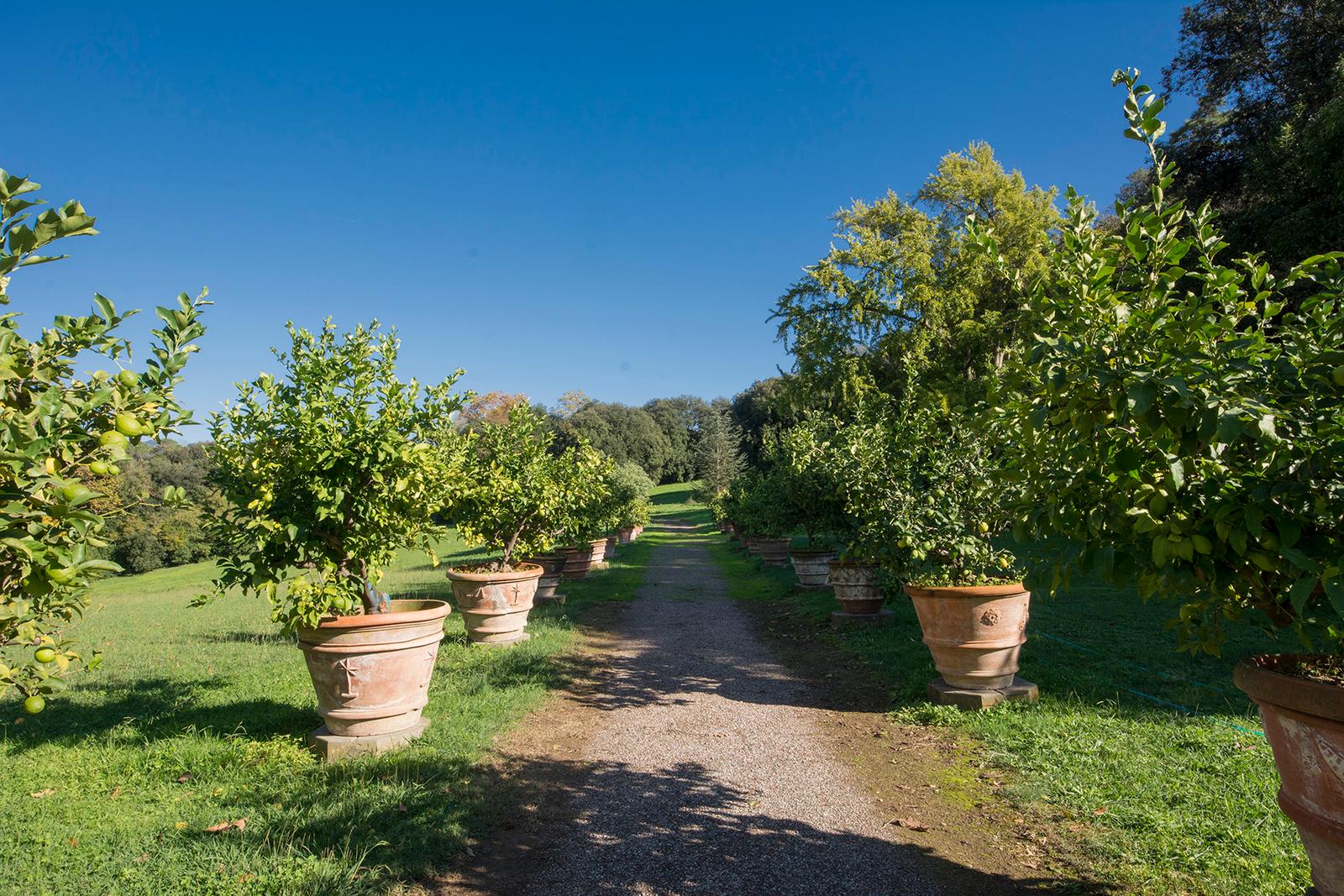
Among the estate's quieter chapters is the careful restoration of the limonaia, the old lemon house. Built in the same years as the villa, it has since been fully renovated and brought back as a living home in its own right, rather than a monument to itself.

vii · a portfolio

The Album

A portfolio of the estate. Tap to enlarge